All-On-4 Vs Individual Dental Implants: Pros And Cons
Choosing between individual dental implants and All-on-4 full-arch treatment comes down to one main factor: how many teeth need replacing and what condition the jaw is in. Individual implants suit patients missing one or a few teeth with otherwise healthy surrounding teeth, while All-on-4 is designed for patients missing most or all of the teeth in an arch. For anyone researching dental implants in Newcastle, understanding these two approaches side by side makes it much easier to know which category applies before booking a consultation.
On this page:
What Are Individual Dental Implants?
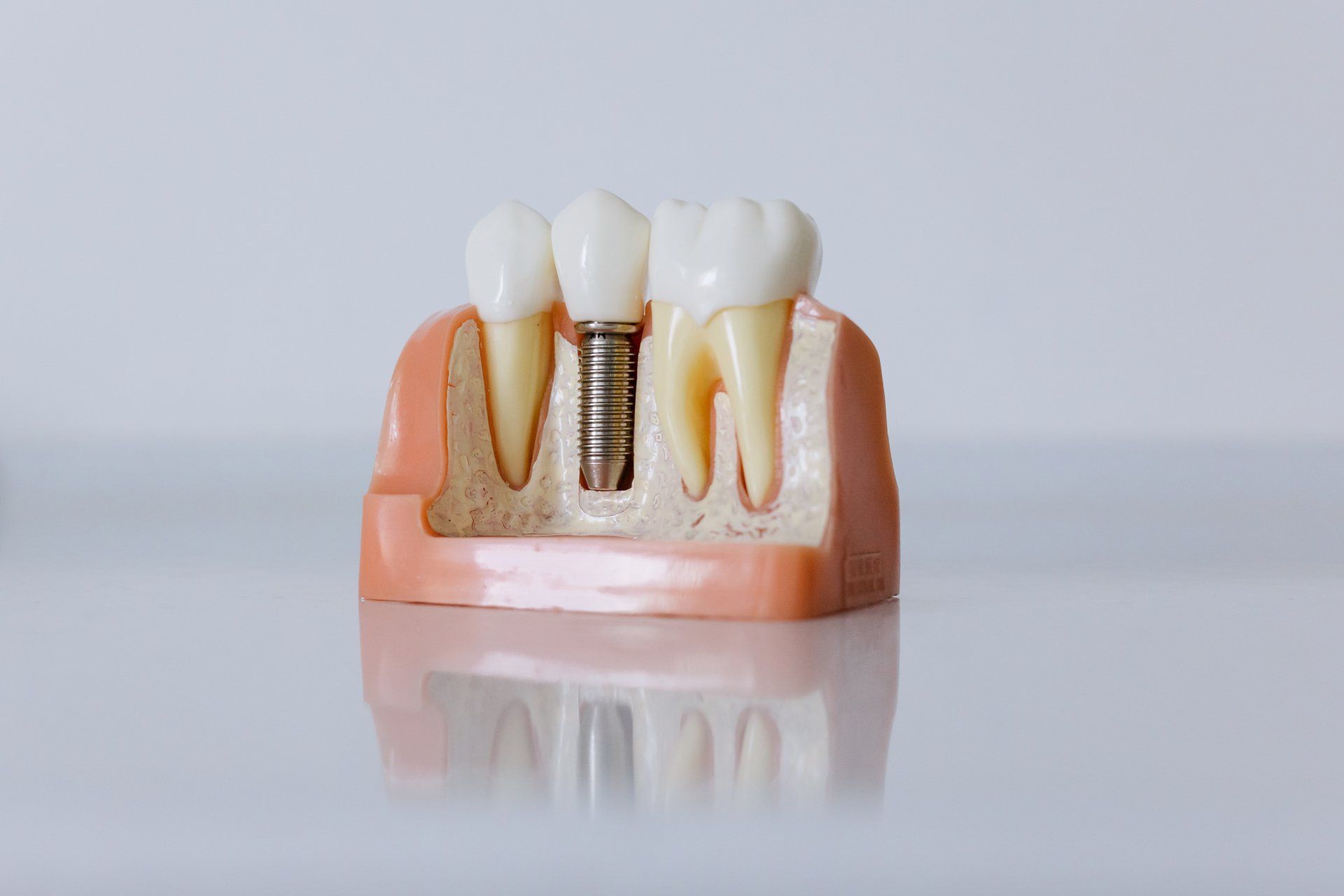
An individual dental implant replaces one missing tooth at a time. A titanium post is placed into the jawbone to act as an artificial tooth root, and once it has integrated with the surrounding bone, a custom crown is attached on top. Each implant functions independently of the others, which means a patient with three separate gaps in their smile may need three separate implants, each placed and restored on its own timeline.
This approach relies on the remaining teeth and jawbone being in reasonably good health. Because each implant stands alone, it does not rely on support from neighbouring teeth the way a bridge does, and it does not affect any teeth that remain in place. Individual implants are generally considered when tooth loss is limited and isolated, rather than widespread across an arch.
What Is All-on-4 Full-Arch Implant Treatment?
All-on-4 is a full-arch solution built around four strategically placed implants per jaw. Two are positioned at the front of the jaw and two are angled further back, which allows the implants to make use of the denser bone typically found in those areas. A fixed prosthetic arch of replacement teeth is then attached to these four implants, replacing an entire row of teeth in one connected structure.
This treatment was developed specifically for patients who are missing most or all of their teeth in an arch, or who are facing full-arch extractions due to widespread decay, gum disease or failing dentures. Because the implants are angled rather than placed vertically, All-on-4 can sometimes avoid the need for bone grafting even in patients with reduced bone volume, though this depends on the individual's jaw structure and is assessed on a case-by-case basis.
Pros and Cons of Individual Dental Implants
Individual implants offer several practical advantages for patients with limited tooth loss:
- They preserve as much natural tooth structure as possible, since only the missing teeth are addressed
- Each implant can be maintained, repaired or replaced independently without affecting the others
- Daily cleaning is similar to caring for natural teeth, using regular brushing and flossing around each implant
- They avoid altering or preparing any healthy adjacent teeth, unlike a traditional bridge
There are trade-offs to weigh as well. Multiple individual implants mean multiple surgical sites if several teeth need replacing, and each implant generally requires its own healing period before the crown can be fitted. For patients missing several teeth across an arch, this can extend the overall treatment timeline and increase the number of appointments required compared with a single full-arch solution. The cost profile also compounds, since each implant, post and crown is priced individually.
Pros and Cons of All-on-4 Dental Implants
All-on-4 is built around efficiency for patients with extensive tooth loss:
- A full arch of teeth is restored using only four implants per jaw, rather than one implant per missing tooth
- Many patients can receive a temporary fixed prosthesis on the same day as surgery, subject to individual healing and suitability
- The angled placement of the posterior implants can make use of available bone, which may reduce the need for bone grafting in some cases
- Ongoing maintenance is centred on one connected prosthesis rather than multiple separate implants
The trade-offs are different to those of individual implants. All-on-4 involves committing to a full-arch solution even if some natural teeth remain, since any teeth left in that arch are generally removed as part of treatment. If part of the prosthesis is damaged, the entire arch may need to be removed for repair, whereas an individual implant issue affects only that single tooth. Cleaning also requires a different routine, since patients need to clean underneath the fixed arch using tools recommended by their dentist, rather than simply brushing and flossing as they would with natural teeth.
Cost, Timeline and Maintenance: How the Two Compare
The two treatments differ across several practical measures that matter to most patients:
- Surgical sites and appointments: individual implants generally involve a separate surgical site for each missing tooth, while All-on-4 involves four implant sites per arch regardless of how many teeth are being replaced
- Treatment timeline: individual implants are often completed on a tooth-by-tooth basis, which can take longer overall if several teeth are involved, while All-on-4 is designed to restore a full arch within a more consolidated timeframe, subject to individual healing
- Day-to-day maintenance: individual implants are cared for like natural teeth, while All-on-4 requires specific cleaning techniques underneath the fixed arch, usually demonstrated by the dental team
- Repairability: a problem with one individual implant can usually be addressed in isolation, while a problem with an All-on-4 prosthesis may involve the whole arch
- Cost profile: individual implants are priced per tooth, so cost scales with the number of teeth being replaced, while All-on-4 is typically priced as a full-arch package
Neither cost structure is inherently better than the other. For someone missing one or two teeth, individual implants are usually the more proportionate option, while for someone facing loss of most or all of an arch, a full-arch package can work out more practical than multiple individual implants. This is also why many patients weighing up either option compare implants with traditional dentures before deciding between fixed solutions altogether.
How a Newcastle Dentist Determines Which Option Suits You
Suitability for either treatment is assessed individually, and a dentist will typically consider several factors during a consultation:
- The health and stability of any remaining natural teeth in the affected arch
- Jawbone density and distribution, including whether preparatory work such as bone grafting may be required
- Gum health and any history of gum disease
- Bite alignment and how the jaws meet
- Smoking history and general medical history, both of which can affect healing and implant integration
Some patients are genuinely suitable candidates for either individual implants or All-on-4, particularly when tooth loss sits somewhere between limited and extensive. In these cases, lifestyle factors and long-term goals often guide the final decision as much as clinical suitability does. Neither option is universally better than the other. The right choice depends on how many teeth are missing and the condition of the jaw, which is why a personalised assessment with a dentist at our Newcastle dental clinic offering dental implants is the essential next step before deciding on a treatment path.
Frequently Asked Questions